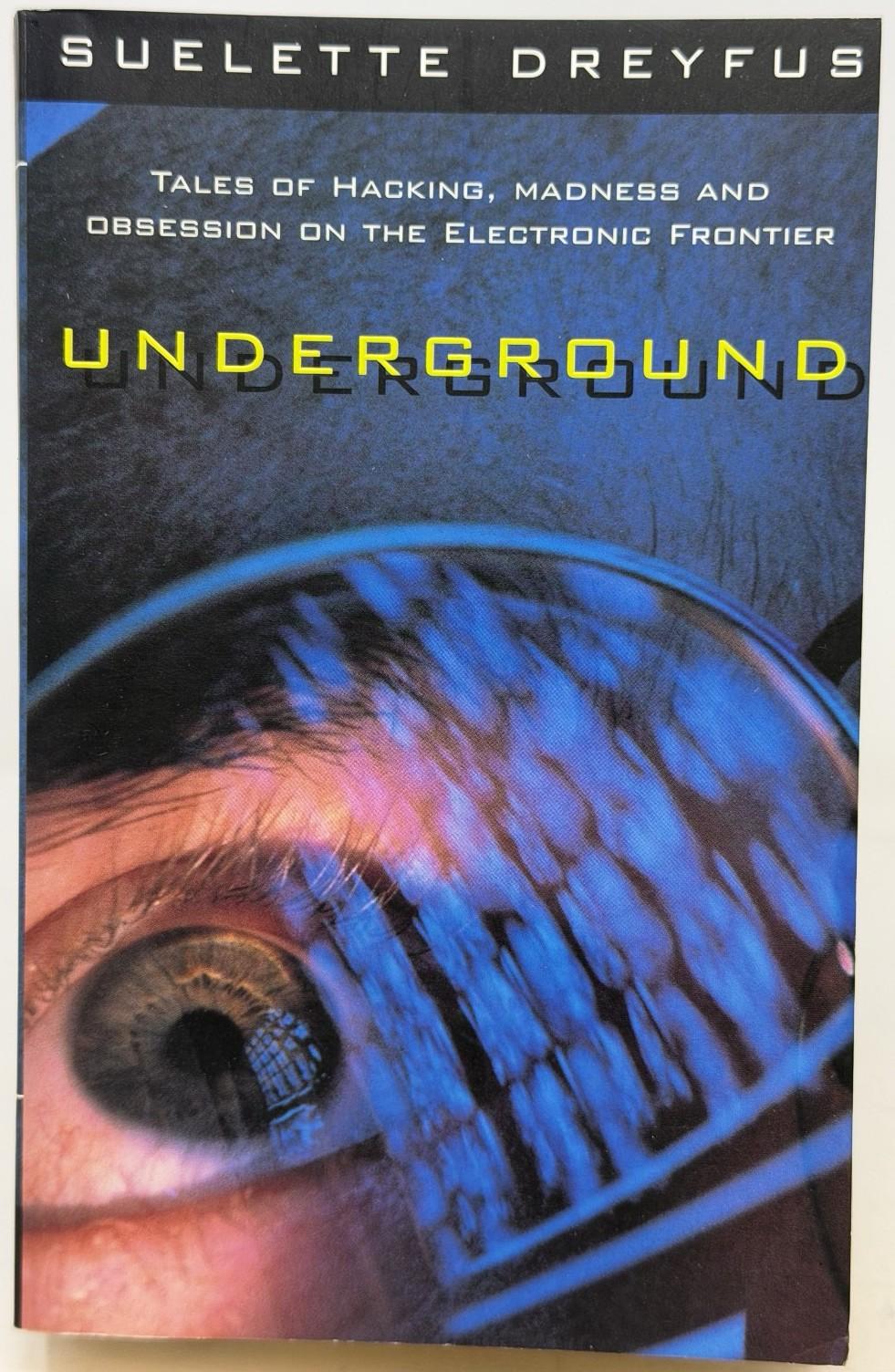
Underground by Suelette Dreyfus - the Greatest Hacker Book
New voyage fatigue 😅💦
After weeks of making the website for A New Voyage (by William Dampier) - from the very beginning with a very simple idea and layout in mind, to the point of pretty good experience for my personal reading and study today - I felt that I learned quite a bit, and that's even before I find the mood to focus and read the book systematically and sequentially.
Although A New Voyage is absolutely great, it's not always easy to read early modern English, and the content is not a simple and easy Crusoe-style adventure story. If Dampier was the first scientific-cum-adventure writer, Defoe recognized the potential of simplified pure adventure within A New Voyage - both of them undoubtedly started something completely new.
The early modern English and the boring part of the content gave me great fatigue 🥵💦, and I really wanted to read a modern book for a change.
🏴☠️ Pirates - the coolest thing, then what...
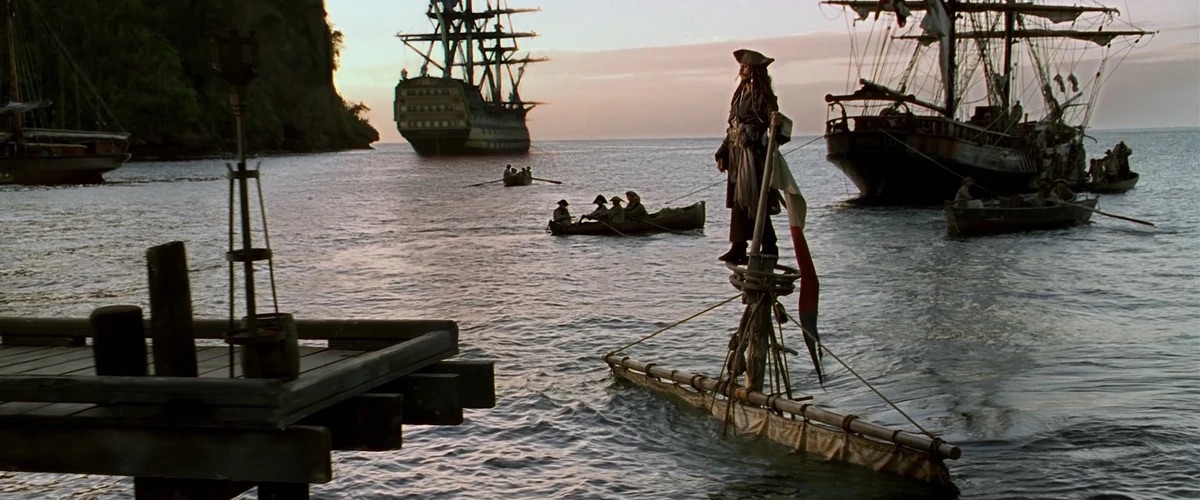
But, after reading about pirates (of the Caribbean 🏴☠️ and Spice Islands 🌶️🏝️), what's the most interesting thing today, or from late 80s to early 2000s? (I'm sure as hell don't wanna read a New York Times bestseller 😜.) It's ... HACKERS!
Something like last year or this year (2026), I read Underground by Suelette. To say it's amazing is an understatement.
Not the only book about hackers from Australia, but perhaps THE first and THE best, and in my opinion could be THE BEST anywhere. (Don't believe me, search google or better - ask ai models - they know all the raving reviews.)
I personally have something like 20 major hacker books (bio, auto bio, memoirs), probably at least 10 of those are either very good or the hacker is too important to dismiss a book because of average writing.
Note: don't let the cover of modern editions fool you, the book is not about Julian Assange, although he was one of the major hackers being profiled (of his early years) and did an amazing job helping Suelette write the book. Took them more than 3 years of serious journalism to write one of the best hacker books. Both are seriously and technically competent and obviously very serious about the project.
"Exactly 300 years"
The book was published in 1997, exactly 300 years after A New Voyage, I think that's pretty neat.
Pirates, hackers - they are very much alike - in fact, much of the early Internet culture is about pirating free warez and sharing knowledge!
🤩 Talking about the golden age of sailing, and the golden age of hacking!
🎥 A great hacker documentary
In 2003, Australia made a very solid documentary, In The Realm of the Hackers, about one of the hackers profiled in the book. Suelette was one of the producers and key voices in the documentary. Much less famous than Julian Assange docs and movies, but in my opinion no less important.
When I was a kid first watching natgeo docs, Australian ocean biologists (as a concept) left a very deep and core impression on me. It's a very general notion and idea, about how cool it is being a scientist, working for university sponsored by the gov - that kind of feeling can only come from a kid, the 90s, old docs, old internet photos, and pre-www days. Needless to say, before I knew anything about the world, I fell in love with docs, science, and Australia.
I'm not saying Australia has a thing for pirates or hackers (as criminals), but Dampier was the first (pirate and) scientist to ever sail there on the first ever government-sponsored long-distance ocean voyage purely for scientific purpose in human history. As a penal colony, plenty of criminals or the lower sorts were shipped to Australia as well, how could they not sympathize with them - it was the Aussies' original core identity, and probably why they still talk differently today 😅.
They certainly have that teenage rebellion spirit, but since it's a very small country in population and very much white, such luxury was tolerated. Besides, who could forget Guadalcanal - the famous pre-mature campaign America risked just to save Australia. (Aussies were literally arming themselves with shovels ready for a fight 😂, talking about how much Brits let them down.)
🆓 Free online
What's even better is - the book is free online.
There are great arguments to be made about free online version. I believe most of the time it's the better strategy to offer this option - most books don't make money anyway - it will not really affect the income and definitely presents much better chance especially in the long run for many more audience which apart from the money was the most important thing for anyone who even bothered to write (certainly they wanted to be read - guarding the copyright of something most (poor) people might just read is stupid).
Since it's free, why bother with this website?
The answer is at the very beginning of this intro - what I learned in the last few weeks - the reading and study experience is unmatched comparing to reading a txt file, a plain html page, a pdf, or a physical copy (if you still have that ancient fetish).
But we got kindle ebooks! You are not wrong, what I think the key advantage of this approach is - the high degree of control of styling and reading experience (of the early web style) over kindle, and without much coding at all.
What I am saying here is, A New Voyage was the best about pirates and scientists, and I claim that Underground is the best about hackers and scientists.
By the way, we are all scientists at heart, the only difference is how and how much you were educated to think and behave like a slave, a businessman, or a scientist.
A personal project
This is a personal project for personal use, but it's also open to the public. Since this reading experience on mobile is quite unique - a simple short web address, simple html but with minimal nice styling, page by page content ... it's in a way better than reading a kindle ebook, and mostly better than reading a pdf on non-mobile devices.
Not to sh*t on pdfs, in fact, I very much love ❤️ pdfs and their various styles.
Chapters
A very, very innocent time
I'm sorry to put in another small essay length intro, but this book greatly interests me 🍉🍉🍉🍉🍉.
First few pages of the book may be a bit slow 🐢 for some people who is not interested in science 🧬 or NASA, but once it reached the Wank Worm 🐛, it pretty much balanced ⚖️ the boring science. The book, however, is very easy to read throughout - once you finished it, you will be amazed 🫢!
Naturally, an interesting question to ask is - how did they not know the word "wank"?
First of all, starting the book with the wank worm is both a genius move, and a very natural thing because both the word and the famous early worm came from Australia.
In 1989, World Wide Web did not exist yet - meaning the Internet did not yet have the clarity of information presentation and efficient linking. There were no global social media platforms, memes, or comment sections.
yt videos and comments are said by many the closest thing to a time machine.
The combined power of social media, memes, and comments in education and knowledge dissemination is absolutely insane. The trick has always been in the numbers (or statistics): when you have millions of viewers, someone will always come up with something funny and insightful (better than any famous philosopher's quote from human history), or in a clear and straight-forward military perspective, when a general has a great staff team and actually listens, someone will always come up with a better strategy (that wins the game & save lives) - no single individual can do what millions people can - internet made that possible.

Wanking NASA was actually a great move, because the guy really just wanted some attention from a cool (science) gov agency, wanking (or looting) the bank was even greater 💵💵💵, but people especially (or consequently) kids back then were very, very innocent. They didn't know the power of money, and simply wanted to be cool. The security of banks were practically non-existent for smart kids (and obviously adults who never got caught).
People believed in a very idealistic American suburban style middle-class life, all the hackers profiled I remember to be either working or professional middle class kids. The parents believed in an innocent American dream, the kids never had to worry about work or food, and consequently they never understood the power of money, at all. If Assange used his superb skills to loot the banks, no one would bat an eye, but the poor kid wanted attention (seriously an attention seeker, lol) ... you get the idea.
🆕⛵️ If 30 years ago people don't know the word wank, imagine 300 years ago how much did people know? We know a lot more than we thought we do, but as long as the knowledge does not translate into money or if the economy is not designed to allow that, then the amount of knowledge we have is very much underestimated. 💵 If the economy can "wank" the most talented, best educated, and experienced people, then we shouldn't feel too bad about it 😂.
All systems are open to hack, the economy may be bad, but the real question is - statistically - are you lucky enough to hack it 😜?
$1,000,000 bank heist... or at least encouraged (sort of 😜)
When I was reading BOOKS about Kevin Mitnick, I was like - this kid was seriously confused. Of course, journalist Markoff of New York Times wasn't and basically helped making him famous (or infamous) in such a way that eventually really helped him.
My impression was - cool guys like Markoff knows what's real crimes and what's a lost kid doing cool and funny things. There was actually quite strong indication almost apparent in his articles for New York Times that hackers like Mitnick SHOULD rob the bank rather than wasting his time messing with the feds. By the way, if anyone was capable of doing it, Mitnick was definitely one of those. Assange was another.
In Australian underground, it's almost the same story. A bunch of lost kids messing with the cops, while adult journalists who were watching them and thought - how do I remind them to rob a bank - that would be really cool.
The half a mil Citibank heist was a good example. It was never a robbery or heist, the gov knows that but the media put out a giant headline that says: Aussie teens robbed the bank!
What it really means was, they almost wanted them to do some ingenious crimes. But how could you expect the lost teenagers to get the message - Aussie teens SHOULD rob the bank!
People like Markoff was one of those cool guys. It was never about the money (gov can print however much they want, then find a way to deal with inflation later), the world was more than big enough to accommodate a few more millionaires (by criminal means).
As a teenage hacker, it's the best time to do the crime and get paid (not to mention money solves real problems even for teenagers), bcoz you can get away, and the adults would actually be seriously impressed, rather than punish you 😅.
Dread pirate is out (of prison 🥹), Assange is out (of prison 🤪), gov is much cooler than u think, lol.